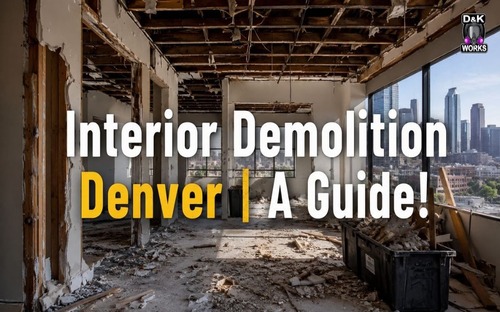
Summary – This guide walks Denver property owners through interior demolition basics: what it involves, when you need it, and why hiring trained contractors matters. It covers the removal process step-by-step, choosing the right contractor, and closes with an FAQ section plus a clear CTA to D&K Works.
Ready to gut that outdated kitchen? Maybe you want to open up a cramped floor plan, or clear out a commercial space before a big remodel. Before any of that can happen, something has to come down first. That’s where interior demolition comes in.
It sounds simple: rip out the old, make way for the new. But done wrong, it can uncover hidden hazards. It can damage structural elements. It can leave you with a mess that costs more to fix than doing it right the first time. This guide breaks down what interior demolition Denver projects actually involve, why hiring experienced interior demolition contractors in Denver property owners’ trust makes all the difference, and what the process looks like from start to finish.
Interior demolition is the careful removal of parts inside a building. Think walls, ceilings, floors, cabinets, fixtures, plumbing, and wiring. The outer shell of the building stays put. Unlike a full teardown, this is precise work. Crews strip the space down to its bones so it’s ready for a new layout, without harming anything meant to stay.
You’ll typically need it for:
Older properties add another layer of risk. Homes and buildings from before the 1980s often hide asbestos, lead paint, or other harmful materials in the walls, floors, or insulation. That’s a big reason interior demolition Denver projects should always begin with proper asbestos testing by a qualified inspector when required. Tearing into the wrong material without testing first can turn a routine remodel into a health and legal problem fast.
DIY demolition looks tempting. Grab a sledgehammer, clear your weekend, and go, right? In practice, it’s rarely that simple. Walls you assume are “just walls” sometimes carry electrical wiring, plumbing lines, or structural load. Take out the wrong one, and you’re looking at a much bigger repair bill than the one you started with.
Trained crews bring a few things a weekend warrior can’t:
This is exactly why experienced interior demolition contractors Denver residents call for aren’t just swinging hammers. They’re managing risk, protecting your property, and keeping the project on schedule.
Every project varies in size and complexity, but most professional interior demolitions follow the same core stages:
1. Site Assessment and Planning: A contractor walks the space, identifies what’s coming out, reviews whether asbestos testing by a qualified inspector is required, and pulls any necessary permits before work begins.
2. Utility Shutoff and Protection: Electrical, plumbing, and gas lines get shut off or capped. Areas outside the demo zone get protected with dust barriers.
3. Selective Removal: Crews remove walls, flooring, ceilings, cabinetry, and fixtures according to plan. They use the right tools to avoid damaging anything meant to stay.
4. Debris Sorting and Disposal: Materials get sorted for recycling where possible. Everything else is hauled away and disposed of properly.
5. Final Clean-up and Inspection: The space gets swept clean and checked for any remaining hazards, then prepped for the next phase of construction.
For most home renovation projects, this process takes anywhere from a few days to about two weeks. It depends on the size of the space and what’s involved. Commercial buildouts can take longer, especially if hazardous material testing or utility work is part of the job.
Not every demolition company is equipped to handle every job. Picking the wrong one can mean blown timelines, code violations, or safety issues down the line. Look for a contractor with proper licensing and insurance. Check for experience across both residential and commercial work. Make sure they have a clear process for handling hazardous materials, plus transparent, itemized pricing before work begins.
This is exactly the kind of contractor worth looking for: one that can coordinate the demolition process properly, ensure any required asbestos testing is completed before work begins, and safely handle asbestos, lead, and mold remediation when needed. That means hidden hazards never bring your remodel to a halt. Free onsite visits and 24/7 emergency response also mean you’re never left guessing what to do next.
Interior demolition might look like the “easy” part of a remodel. But it sets the foundation, literally, for everything that follows. Knowing what’s involved, watching for hidden hazards, and hiring a team that handles both the teardown and the safety side of the job can save you time, money, and headaches later on.
If you’re planning a remodel or interior demolition Denver area, don’t leave the demolition phase to chance. D&K Works Asbestos Removal and Mold Remediation offers free onsite visits, licensed crews, and 24/7 emergency service to make sure your project starts off safe and on schedule. Contact D&K Works today to schedule your assessment.

D&K is a small but growing family owned business that was established in 2010.